
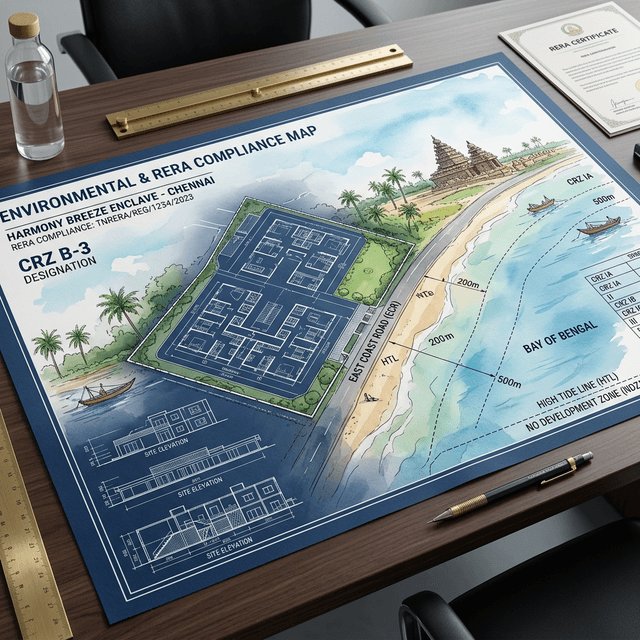
Understanding CRZ Zones in Tamil Nadu and Their Real Estate Impact
Tamil Nadu boasts one of India's longest, most picturesque, and commercially vital coastlines, stretching over a thousand kilometers from the bustling shores of Chennai down to the absolute southern tip of Kanyakumari. However, the intersection of rapid urban development and fragile marine ecology creates a massive regulatory challenge. Developing sustainable real estate, commercial resorts, or even basic residential infrastructure anywhere near the sea requires incredibly strict adherence to the Coastal Regulation Zone (CRZ) rules established and periodically revised by the Ministry of Environment, Forest and Climate Change (MoEFCC).
For high-end developers and environmentally conscious buyers alike, understanding these complex zones is not merely an academic exercise; it is an absolute legal necessity that dictates what can be built, where it can be built, and what height a structure can achieve.
What exactly are CRZ Zones?
The primary objective of the CRZ notification is to fiercely protect the delicate coastal ecosystem, explicitly regulate the staggering developmental activities near coastlines to ensure they are sustainable, and profoundly protect the livelihood of traditional fishing communities. The regulations restrict heavy industrial or unregulated dense residential development near the high-tide lines of the coast, estuaries, and backwaters.
Depending on the ecological sensitivity, the geomorphological features of the coast, and the existing level of urbanization, coastlines across India are strictly classified into four major categories: from CRZ-I (the most highly restricted) to CRZ-IV (the aquatic areas up to territorial limits).
- CRZ-I (Ecologically Sensitive Areas): These are areas that are incredibly ecologically sensitive and essential for maintaining the ecosystem's integrity. This includes thriving mangroves, vibrant coral reefs, vital sand dunes, turtle nesting grounds, and bird sanctuaries. Absolutely no new construction is permitted in these zones, except for essential projects authorized by the Department of Atomic Energy or specific defense installations.
- CRZ-II (Built-up Municipal Areas): These are coastal areas that have already been developed up to or intensely close to the shoreline within formally designated municipal limits, heavily urbanized regions. For real estate developers in cities like Chennai, particularly along the established stretches of the East Coast Road (ECR) within city limits, this is the most crucial zone. Construction is heavily regulated but permitted on the landward side of existing authorized roads or structures, subject to specific town planning norms.
- CRZ-III (Rural and Undisturbed Areas): These are coastal patches that are relatively undisturbed and primarily belong to rural areas, ranging from pristine beaches to coastal villages. These zones are generally designated as 'No Development Zones' (NDZ) up to 200 meters from the High Tide Line. Between 200 and 500 meters, only specific activities like agriculture, forestry, and designated tourism facilities are permitted, rendering them highly complex for standard residential real estate developments.
- CRZ-IV (Water Areas): This zone covers the actual aquatic area from the Low Tide Line (LTL) up to specifically designated territorial limits. This strictly regulates activities affecting the water column and seabed, focusing heavily on preventing unchecked pollution and illegal sand mining.
The Direct Impact on Real Estate Configurations
For premium builders aiming to capitalize on the massive demand for ocean-view properties along the ECR and OMR link roads, navigating CRZ clearances is the single biggest operational hurdle. These complex regulations directly and inflexibly dictate the project's ultimate viability.
CRZ regulations strictly cap the Floor Space Index (FSI) and enforce absolute building height restrictions. A developer simply cannot build a towering 30-story skyscraper on a CRZ-II plot, no matter how much land they own. This artificial cap on supply ensures that coastal properties remain exclusive, low-density, and consequently, incredibly expensive, preserving their premium status.
Furthermore, developers must adhere to mandatory buffer distances from water bodies, drastically altering site layouts and potentially rendering large portions of an acquired land parcel completely unbuildable. The recent 2019 zoning revisions, while introducing some highly debated relaxations aimed at promoting sustainable coastal tourism and regulated premium housing, still require an exhausting, multi-tiered clearance process involving the State Coastal Zone Management Authority (SCZMA).
The Polaris Realm Approach to Environmental Diligence
At Nalam Properties, we recognize that making the right investment must coexist harmoniously with the environment. We conduct incredibly exhaustive, proprietary environmental impact audits long before formally acquiring any coastal buffer lands. This involves deploying specialized ecological consultants to precisely map High Tide Lines and unequivocally confirm zoning classifications.
By prioritizing absolute structural compliance and deep environmental preservation right from the land acquisition phase, we ensure that all our ultra-premium developments offer breathtaking views of the Bay of Bengal while strictly securing rapid, unchallengeable RERA and CRZ environmental clearances. We believe that protecting the coastline is not just a regulatory hurdle; it is a fundamental responsibility that guarantees the long-term value and sheer beauty of our properties for generations.